


Dropout
DROPOUT by CollegeHumor
I came to Dropout looking for something more distinctive than the usual entertainment apps, and I found a service built around comedy, improvisation, and tabletop storytelling rather than an enormous mix of unrelated content. It is an entertainment app from DROPOUT by CollegeHumor, and its main appeal is easy to understand: shows such as Game Changer, Dimension 20, and Make Some Noise sit at the center of the experience.
That focus makes a real difference. Instead of opening the app and spending half an hour deciding what to watch across thousands of interchangeable titles, I can usually identify the kind of mood I want quickly. I might choose a chaotic studio game, a long-form fantasy adventure, or a short improvisational performance. Dropout works best when you want personality and recurring performers, not background television.
The app is free to install, and it has reached over a million installs with a very strong average rating of 4.9 from around 100 thousand ratings. Those figures suggest that its audience is unusually enthusiastic, but they also hint at the service’s main limitation: this is a focused destination for a particular style of comedy. If you prefer mainstream dramas, live news, sports, or a broad family catalog, this will not replace your other streaming choices.
What using Dropout feels like today
A focused home for comedy-led programming
The first thing I noticed is that Dropout does not feel like a general-purpose video shelf. Its identity comes from the shows themselves and from the people who return across them. That gives the app a more familiar, community-like atmosphere than a platform where every title belongs to a different studio and tone.
Game Changer is a good example of why the service stands apart. Its premise can shift from one episode to another, so I do not approach it expecting a fixed formula in the same way I would approach a conventional sitcom. Make Some Noise offers a similar reason to keep watching: the enjoyment comes from performers reacting quickly, committing to strange ideas, and building jokes in the moment.
Related News

Why WhatsApp Messenger Still Makes Everyday Communication Feel Easy

Jurassic World: The Game Is the Better Dino Tycoon for Strategic Players

Threads in Real Life: Who Should Join, Lurk, or Leave

How SHEIN Turned Shopping Into an Endless Content Feed

How to Make Fortnite Feel Smarter on Mobile

Should You Switch to Microsoft Outlook on Mobile?
Dimension 20 serves a different need. It is better suited to viewers who want to settle into a longer story and follow a tabletop role-playing campaign over time. I would not recommend starting there if you only have ten minutes and want an immediate laugh, but it becomes a rewarding choice when I am ready to give a cast and setting my full attention.
This variety within a narrow identity is one of the app’s strongest qualities. The catalog is not broad in the way a large general streaming service is broad, yet the viewing experiences can feel very different. I can move from quick comedy to an involved fantasy campaign without leaving the same creative world.
How I would use it in an ordinary week
My most practical use case is a short evening break after work. If I have enough energy for something playful but not enough patience for a complicated new series, I can open the app and choose an episode built around personalities and a clear comic setup. That is more satisfying than endlessly scrolling through a general service while deciding whether I want a film, a documentary, or another serious drama.
Gallery
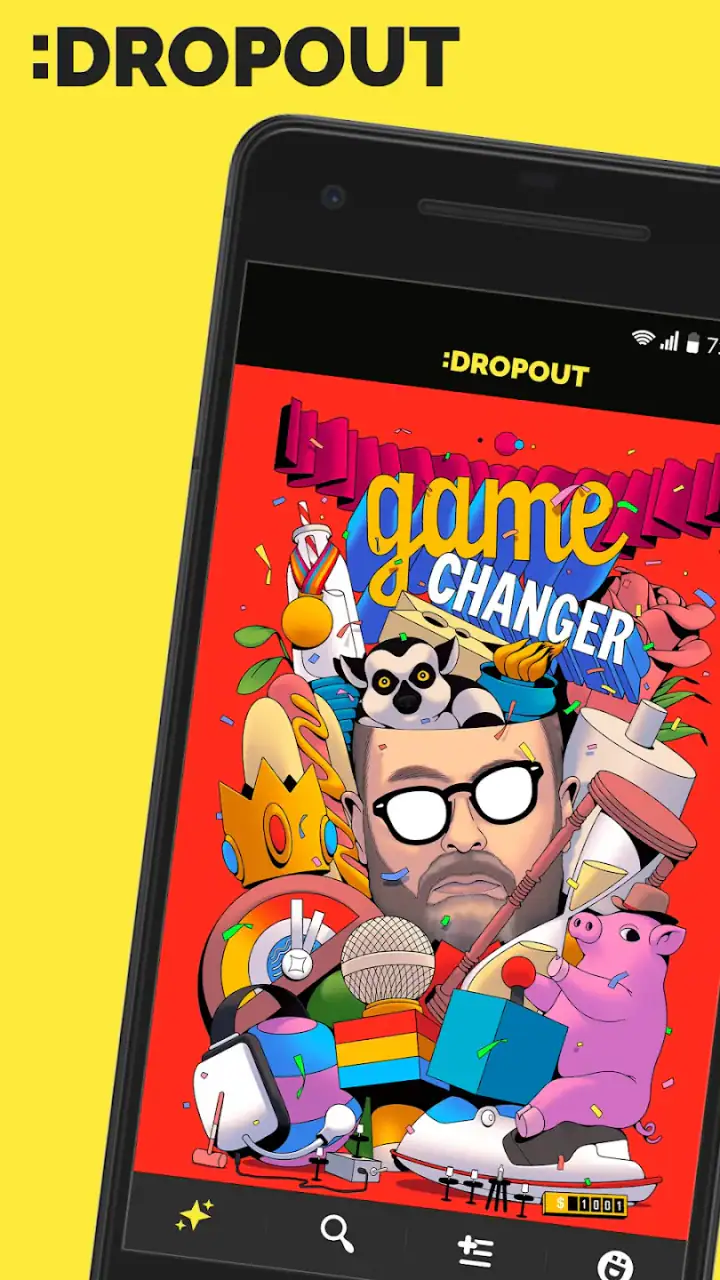
On a weekend, I would use it differently. Dimension 20 is the kind of programming I would reserve for a longer session, preferably when I can pay attention to dialogue, character decisions, and the developing campaign. Watching it while constantly checking messages would weaken the experience. This is an important distinction: Dropout can provide casual entertainment, but some of its best material rewards active viewing.
The app also suits shared viewing with friends who already enjoy improvisation or tabletop games. The conversation after an episode can be almost as entertaining as the episode itself, especially when a surprising prompt or character decision becomes an inside joke. For a household with very different tastes, however, its specialization may become a drawback because not everyone will want the same kind of comedy.
Navigation, discovery, and the value of knowing what you want
I find the service easiest to use when I arrive with a rough idea rather than expecting an algorithm to solve my evening. If I want a game-based comedy format, I look toward Game Changer. If I want improvisation, Make Some Noise is the obvious direction. If I want a campaign that can occupy several viewing sessions, I choose Dimension 20.
That approach is more efficient than treating the app like a random content generator. It also reveals a trade-off. A huge platform may be better at helping me discover something completely outside my habits, while Dropout is better at helping me choose among related forms of comedy. Its curated identity is a strength for fans, but a smaller discovery net for undecided viewers.
I recommend creating a simple personal routine: sample one episode from each major style before committing to a long series. That prevents a common mistake, which is judging the whole service after trying only one format. Someone who dislikes a particular studio game may still enjoy the tabletop shows, while a viewer who finds long campaigns intimidating may prefer short improvisational episodes.
What the app’s evolution tells me
Dropout launched on December 6, 2018, and the current Android release is version 9.304.1. I see that ongoing versioning as evidence of a maintained product rather than a forgotten companion app. For an existing user, that matters because a regularly updated application is more likely to remain practical as mobile operating systems and viewing habits change.
The minimum requirement of Android 8.0 also makes the app accessible to many older Android devices without targeting only the newest phones. That is useful if I keep a reliable older handset for streaming, although device age can still affect how smoothly any video app behaves. I would judge performance on the actual phone, connection, and display rather than assuming the same result for everyone.
It is important not to confuse product maintenance with a promise of a particular future feature. The current version tells me that the app continues to be worked on; it does not guarantee what the next redesign, playback change, or catalog decision will bring. I would treat future updates as something to evaluate when they arrive, not as a reason to buy into expectations.
Subscription cost and the decision to pay
The app itself is free to download, while in-app purchases range from $4.99 to $69.99 per item. That makes the first step low-risk: I can install it, explore the presentation, and decide whether its programming matches my sense of humor before spending money.
The more important question is not whether the download costs anything, but whether I will watch enough of this specific catalog to justify the purchase options. A general streaming subscription may offer more total genres for a similar commitment, while Dropout can be better value for someone who regularly watches its original comedy and tabletop programming.
I would avoid paying simply because the rating is high. A 4.9 average and around 28 thousand written reviews show strong satisfaction among reviewers, but ratings cannot predict whether I personally enjoy improvisational humor or extended role-playing stories. The right test is to sample several formats and ask whether I am returning because I genuinely want the next episode.
Families should also note the Teen content rating. I would not treat that label as a substitute for checking whether a particular show suits younger viewers. The tone can vary across comedy formats, and a parent who wants a consistently child-focused catalog should choose a service designed around that need instead.
Where Dropout is stronger than ordinary alternatives
Compared with a broad streaming service, Dropout has a clearer creative voice. I am less likely to encounter a catalog full of unrelated titles that feel assembled for maximum coverage. The trade-off is obvious: the larger service wins when I want a crime drama, animated film, cooking program, or documentary in the same sitting.
Compared with free video platforms, Dropout offers a more coherent destination for its recurring shows. Free platforms may provide endless clips and one-off sketches, but that abundance can make it harder to follow a complete series or understand how a program fits into a wider catalog. Dropout is more useful when I want an organized home for a particular group of formats.
Compared with a podcast app, it is a better choice when facial reactions, physical comedy, costumes, or visual game mechanics are central to the joke. A podcast can be more convenient during a commute or while doing chores, but I would miss part of the experience if I treated visually driven episodes as audio-only entertainment.
Compared with a dedicated tabletop platform, Dimension 20 gives me a polished route into campaign-based storytelling without requiring me to organize a game myself. That does not make it a replacement for playing with friends. It is a performance to watch, while a real tabletop session gives me control over decisions and participation.
Small workflow tips that improve the experience
My first tip is to separate “quick laugh” viewing from “ongoing story” viewing. I keep Game Changer or Make Some Noise in mind when I want a compact, energetic choice. I treat Dimension 20 as a scheduled commitment, because remembering characters and following the campaign becomes easier when I watch consistently rather than in scattered bursts.
My second tip is to judge the service by a small rotation, not by one title. I would sample one episode from each of the three recognizable styles before deciding whether the app belongs in my regular entertainment lineup. This is especially useful for people who think they dislike tabletop content but may enjoy the cast chemistry, or who expect every comedy show to use the same structure.
My third tip is to use the app as a social recommendation rather than a solitary catalog. If a friend already follows a particular cast or campaign, starting with that shared interest makes the service easier to appreciate. The shows often benefit from discussion, and a personal recommendation can cut through the uncertainty created by a focused but unfamiliar catalog.
My fourth tip is to plan around attention. I would not begin a long Dimension 20 episode during a noisy commute if I care about the story. For travel, chores, or a crowded room, I would choose a format whose humor remains easy to follow in short bursts. This simple distinction prevents me from blaming the app for a viewing situation that does not suit the content.
The gaps I still notice
The biggest gap is breadth. Dropout is not the app I would open when several people want completely different genres. Its narrow identity is exactly why fans like it, but it also means I may need another service beside it for films, conventional series, news, or children’s programming.
The second gap is that its strongest material may demand a little commitment. Improvisational comedy can be personal: if the performers’ style does not click with me, the energy may feel forced rather than funny. Long tabletop campaigns can also seem difficult to enter if I am not ready to remember a cast, setting, and continuing plot.
The third gap is financial fit. The free installation lowers the barrier to trying the app, but the in-app purchase range means I should think about my actual viewing frequency before committing. Someone who watches one episode every few months may be happier with occasional access to other entertainment, while a devoted fan can reasonably find the focused catalog worthwhile.
There is also a practical platform consideration. The listed Android requirement begins at version 8.0, which is friendly to older devices, but my experience would still depend on the phone’s age and video performance. If the handset struggles with modern streaming apps generally, installing Dropout will not solve that underlying problem.
Who should install it, and who should skip it
I would recommend Dropout to viewers who enjoy ensemble comedy, improvisation, recurring performers, or tabletop storytelling. It is particularly appealing if I want shows that feel made around a creative group rather than selected from a massive anonymous catalog. Fans who like Game Changer, Make Some Noise, or Dimension 20 have a clear reason to investigate it.
I would also recommend it to someone who wants a more intentional alternative to endless scrolling. The app’s focused identity makes it easier to decide what kind of entertainment I am seeking, provided that its style matches my interests. It can become a dependable evening destination rather than another app I open without a plan.
I would skip it if I need one subscription to cover every household taste, or if I mainly want passive background viewing with little attention. I would also look elsewhere if my priority is live programming, major mainstream releases, or a large selection of unrelated genres. Dropout is not trying to win those comparisons, and I would rather choose a service that fits those needs.
What I would watch as the app continues to develop
With version 9.304.1 currently available, I would pay attention to whether future updates make discovery easier without weakening the service’s focused character. The ideal direction would help new users understand the difference between the comedy formats and find a starting point quickly, while keeping returning viewers close to the shows they already follow.
I would also watch how the app continues to serve both casual viewers and people invested in long campaigns. Those audiences need different kinds of guidance: one wants a fast, low-commitment recommendation, while the other wants continuity and an easy way to resume a story. A good evolution would respect both without turning the interface into a complicated dashboard.
My current conclusion is straightforward. Dropout is worth installing when its particular brand of comedy is the reason you are opening an entertainment app. The free download makes testing simple, the Teen rating is worth keeping in mind for shared viewing, and the Android requirement should suit many older devices. I would not purchase it as a universal replacement for every streaming service, but I would recommend it to a friend who wants inventive comedy, recognizable performers, and tabletop storytelling with a strong identity.
After using it, I see the app less as a general television warehouse and more as a dependable club for a specific kind of viewer. That is both its boundary and its appeal. If Game Changer, Dimension 20, and Make Some Noise sound like the sort of shows you would actively choose rather than merely tolerate, Dropout has a convincing place in your entertainment rotation. If they do not, its excellent rating will not change the basic mismatch.
FAQs for Dropout
What is Dropout and what features does it offer?
Dropout is a unique streaming service that offers a variety of original shows, cartoons, and uncensored content. It features exclusive series, interactive content, and a vibrant community. Users can enjoy ad-free viewing, offline downloads, and participate in live events, making it a compelling choice for entertainment enthusiasts.
Is Dropout available on both Android and iOS platforms?
Yes, Dropout is available for download on both Android and iOS platforms. Users can find it on the Google Play Store and the Apple App Store, ensuring compatibility across a wide range of devices. This accessibility allows users to enjoy content on their preferred mobile devices seamlessly.
Does Dropout require a subscription to access content?
Dropout operates on a subscription model, requiring users to sign up for a monthly or annual plan. The subscription grants access to the full library of content, including new releases and exclusive shows. There are no hidden fees, and users can cancel their subscription at any time without hassle.
Can I watch Dropout content offline?
Yes, Dropout allows users to download content for offline viewing. This feature is particularly useful for those who want to watch shows and movies without an internet connection, such as during travel or in areas with limited connectivity. Simply download your favorites and enjoy them anytime, anywhere.
What kind of content can I expect from Dropout?
Dropout offers a diverse range of content, including original animated series, comedy shows, and exclusive podcasts. Fans of quirky, uncensored, and bold entertainment will find a lot to enjoy. The platform frequently updates its library with fresh content, ensuring there's always something new to discover.
Pros
- Diverse range of original comedy content.
- Ad-free streaming for uninterrupted viewing.
- User-friendly interface with easy navigation.
- Offline downloads for on-the-go access.
- Regular updates with fresh new shows.
Cons
- Limited availability outside the US.
- No free trial to test the service.
- Some content may not appeal to all tastes.
- Subscription required for full access.
- No option for live TV or sports channels.


